Decompression at two levels, fusion at one — L4–L5
Professor Iakiv Fishchenko
A 71-year-old woman had narrowing of the spinal canal at L3–L4 and L4–L5. At the lower level, L4 had slipped forward relative to L5 (grade I anterolisthesis).
Why surgery was considered
Walking brought on pain in her lower back and both legs. Her symptoms had worsened over the previous year despite non-surgical treatment. Before the operation, she could walk 100 metres.
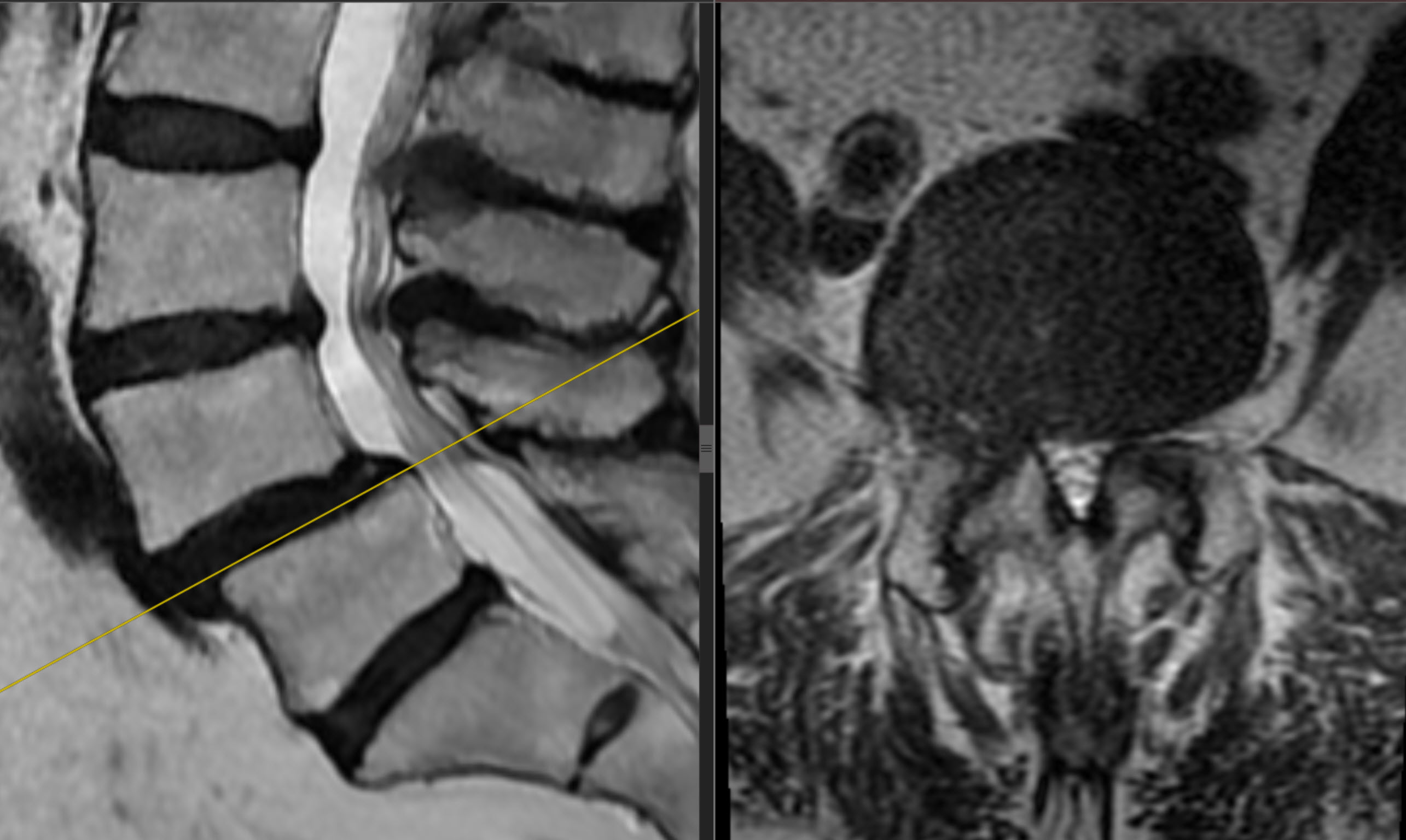
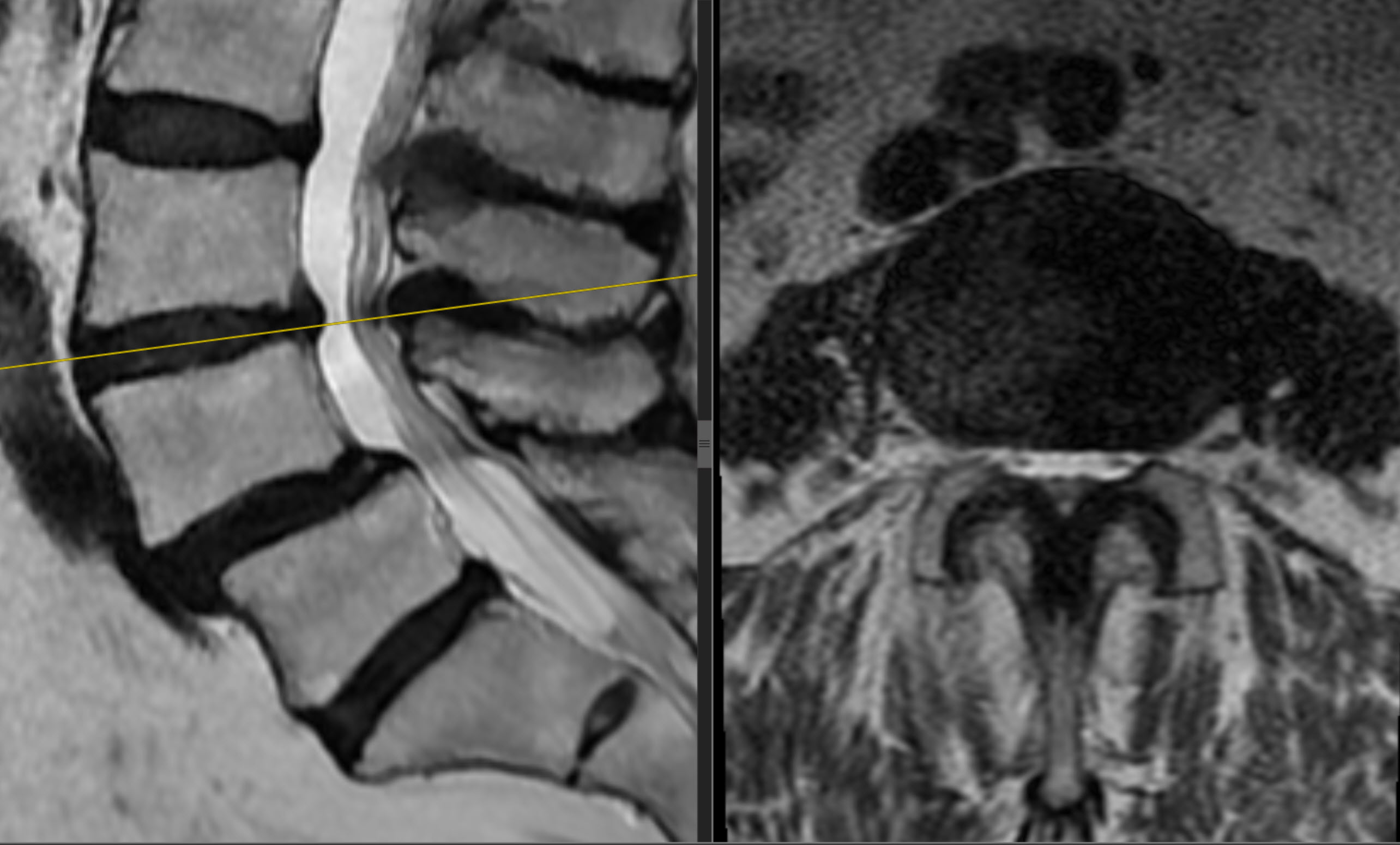
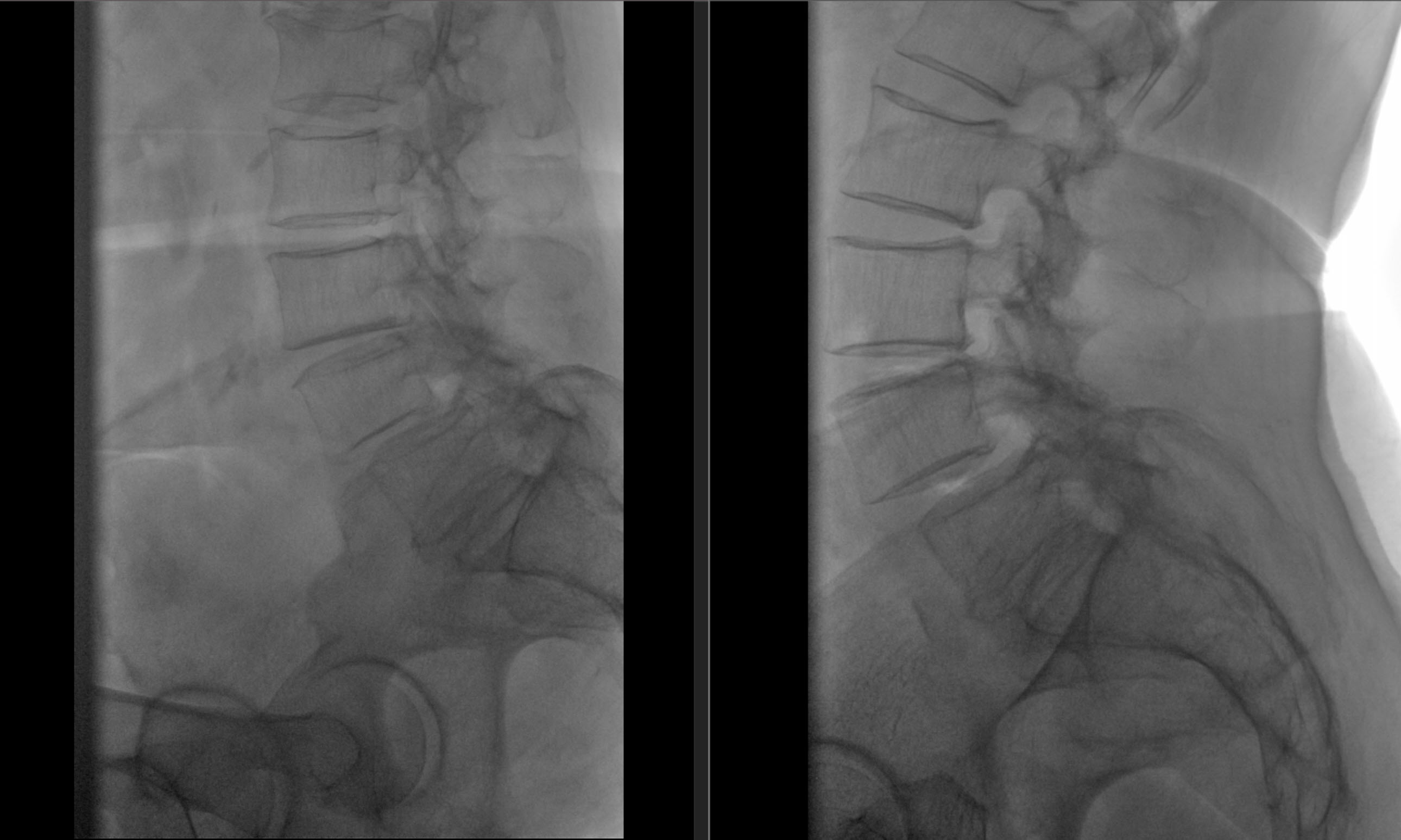
What was done at each level
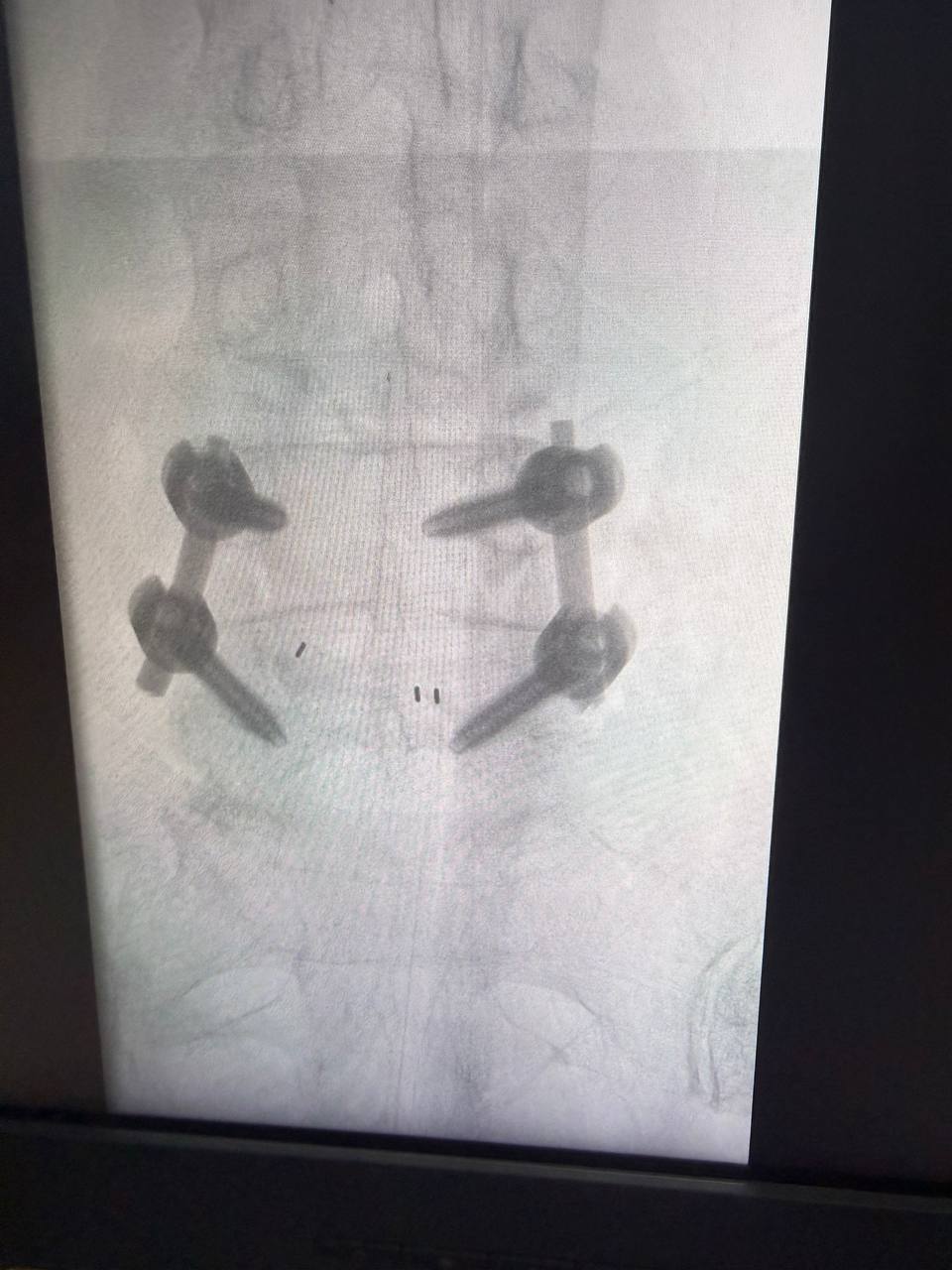
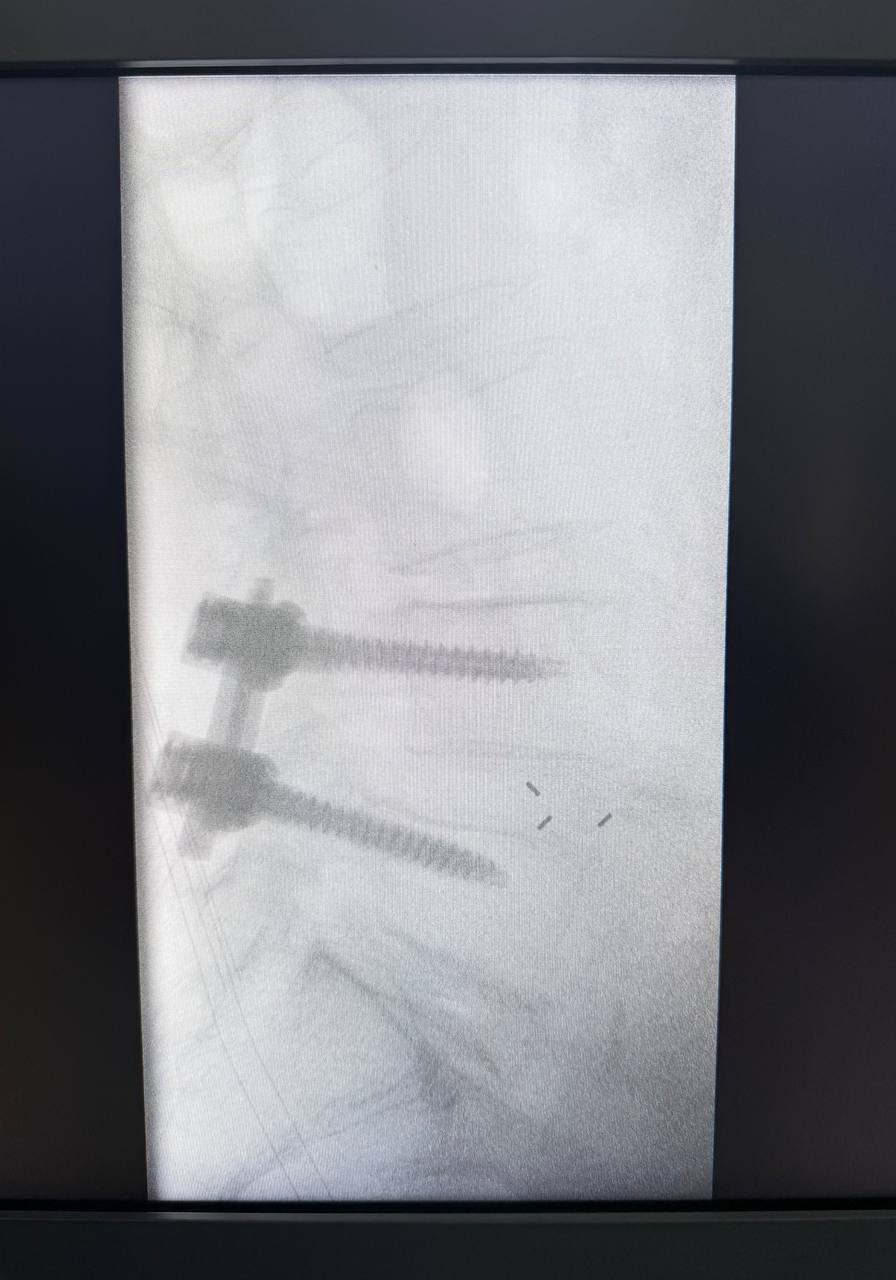
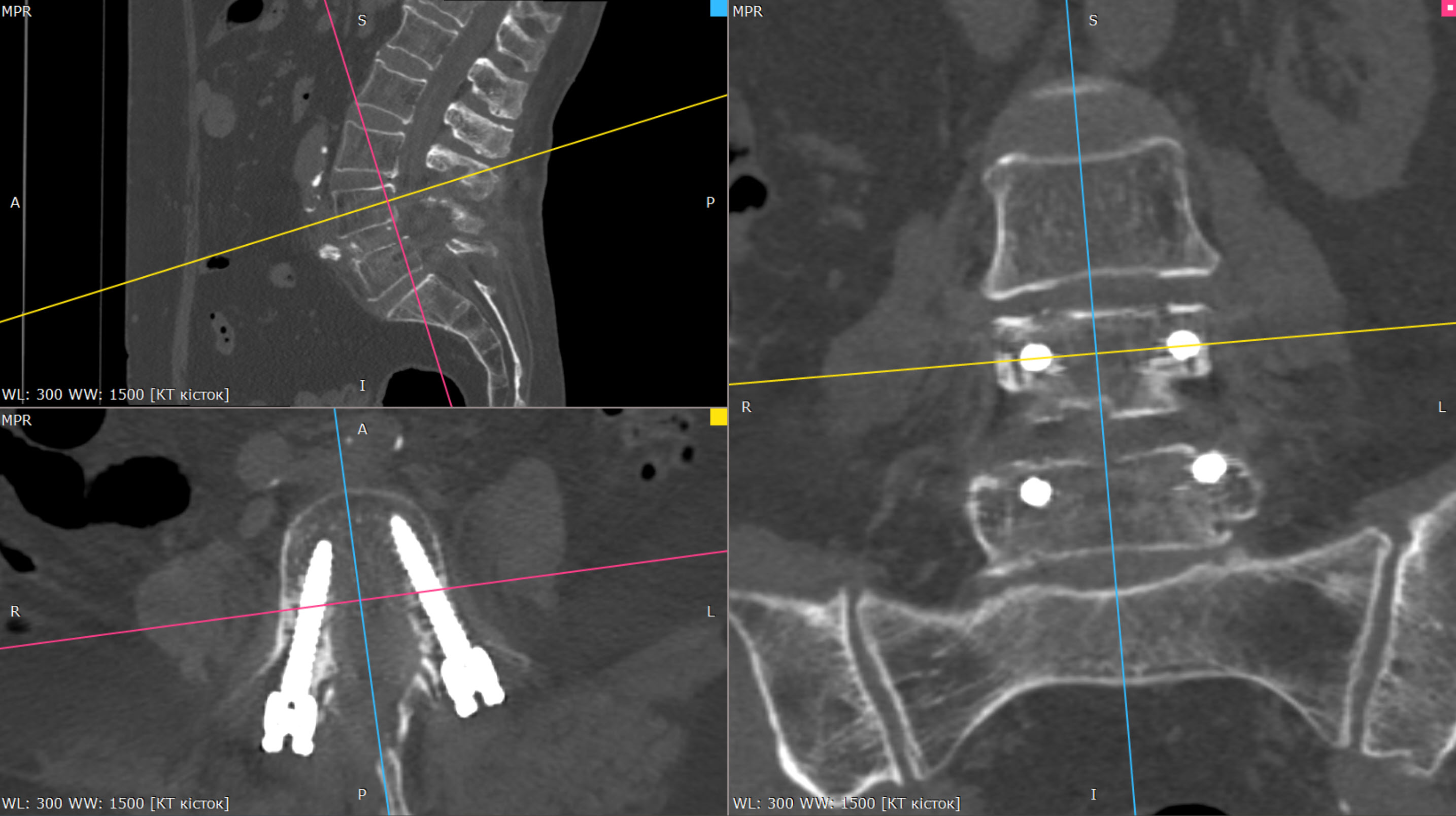
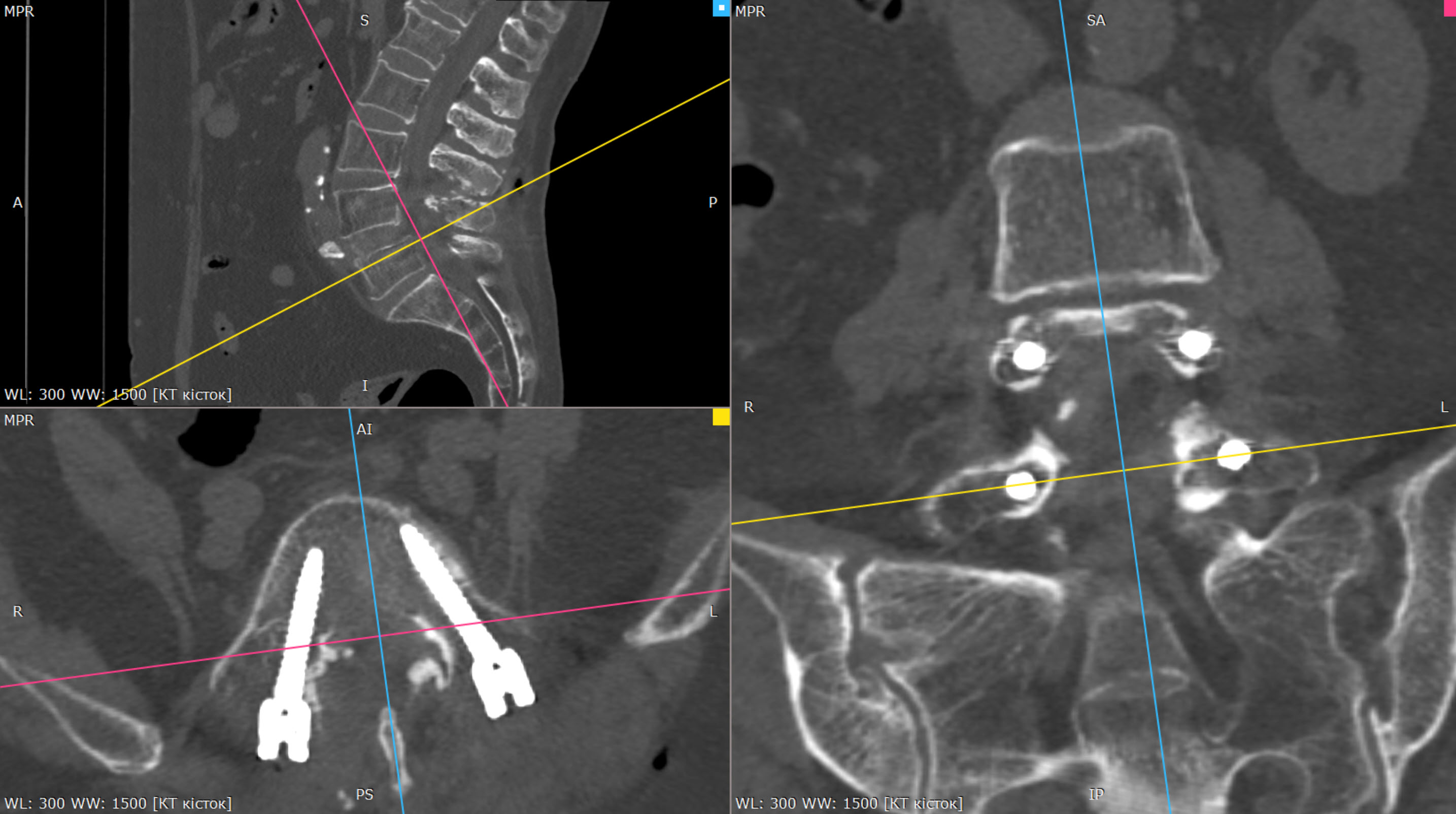
At L3–L4, biportal endoscopic decompression created more space for the nerves. At L4–L5, where the vertebra had slipped, decompression was combined with fusion. An interbody cage was placed between the vertebral bodies, and pedicle screws secured the vertebrae.
How her symptoms changed
She could walk 150 m on day five and 400 m at one month. At one month she rated her low back pain at 2/10 and the pain in each leg at 1/10.
| Measure | Before surgery | Day 5 | One month |
|---|---|---|---|
| Low back pain, VAS (0–10) | 6–7 | 4 | 2 |
| Right leg pain, VAS (0–10) | 5 | 2 | 1 |
| Left leg pain, VAS (0–10) | 5 | 2 | 1 |
| Oswestry Disability Index (ODI) | 50 % | 42 % | 16 % |
| Walking distance | 100 m | 150 m | 400 m |
The visual analogue scale (VAS) rates pain intensity from 0 to 10. The Oswestry Disability Index (ODI) measures how much back pain limits everyday activities.
Video
3D reconstruction from the CT scan after L4–L5 fusion. A full 360° rotation in 15 seconds.
Endoscopic footage from the operation
A 15-second endoscopic view of the operative field and a surgical instrument.